Farming Events
Cardamom is widely valued for its culinary, medicinal, and aromatic properties. It enhances the taste of tea, coffee, sweets, desserts, and traditional dishes while offering natural health benefits. At Kiruthika Prabu Cardamoms, we focus on maintaining high standards in cultivation, drying, grading, and storage to preserve the spice’s natural goodness.
Mission & Values
Organic Farming & Sustainable Agriculture
Discover premium-quality green cardamom from Kiruthika Prabu Cardamoms, offering rich aroma, superior flavor, freshness, and natural goodness.
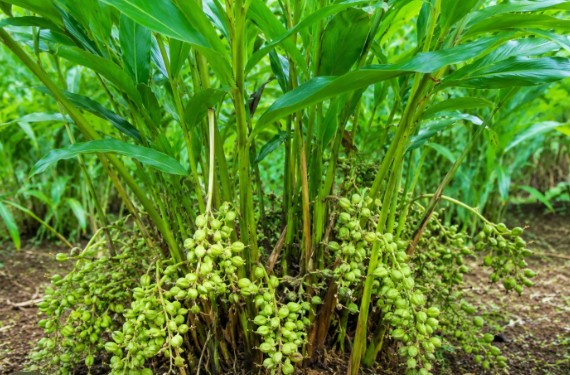
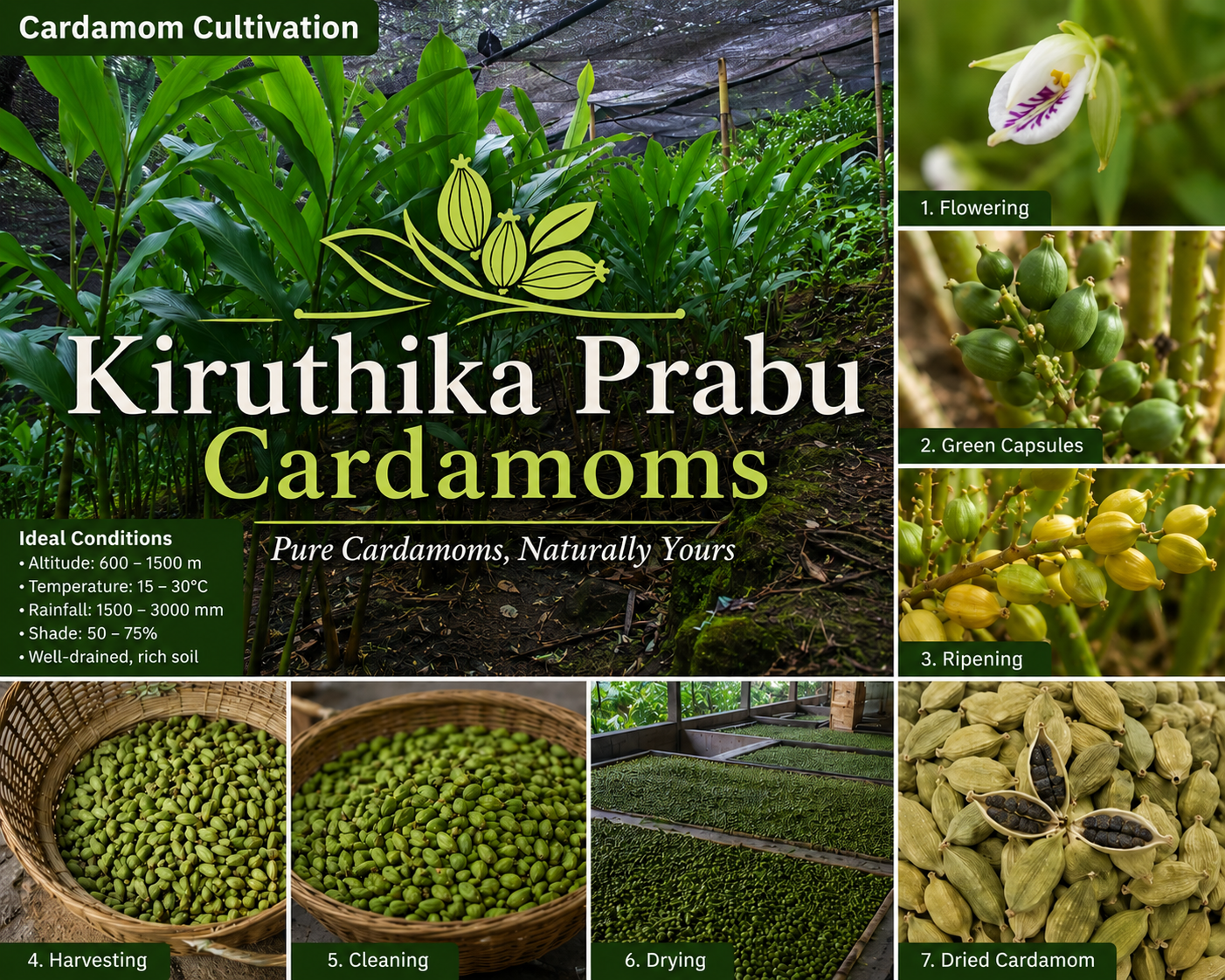
Cardamoms can be cultivated in warm, humid, and tropical regions with rich soil, moderate temperatures, and adequate rainfall. The best places for cardamom cultivation include mountain regions, the Eastern Ghats, the Western Ghats, and several countries with tropical climates. Cardamom thrives under shade and grows best in forest-like environments with well-drained soil.We have best cardamom exporter and seller in Chennai in Kiruthika Prabu Cardamoms.
Introduction
Cardamom is one of the world’s most valuable and aromatic spices. Often called the “Queen of Spices,” it is widely used in food, beverages, traditional practices, and the fragrance industry. Because of its high market value and growing global demand, many farmers and agricultural experts are interested in learning where cardamoms can be cultivated successfully in Kiruthika Prabu Cardamoms.
Cardamom cultivation requires specific environmental conditions. Unlike many crops that can grow in different climates, cardamom performs best in regions that offer consistent rainfall, fertile soil, moderate temperatures, and natural shade.
Understanding the ideal cultivation areas helps farmers improve crop quality, increase productivity, and produce premium-grade cardamom for domestic and international markets.
Why Climate Matters in Cardamom Cultivation
Cardamom is a tropical plant that belongs to the ginger family. It naturally grows in forest ecosystems where environmental conditions remain stable throughout the year.
Ideal Conditions for Growing Cardamom
-
Temperature between 10°C and 35°C
-
High humidity
-
Well-distributed rainfall
-
Rich organic soil
-
Partial shade
-
Good drainage
These conditions help cardamom plants develop healthy roots, strong stems, and high-quality pods.
Top Places Where We Can Cultivate Cardamoms
1. Mountain Regions
Mountain regions are among the best locations for cultivating cardamoms.
Why Mountain Regions Are Ideal
Mountain areas offer several advantages:
-
Cool temperatures
-
Frequent rainfall
-
Rich forest soil
-
Natural shade
-
High humidity
These factors create an environment similar to cardamom’s natural habitat.
Elevation Requirements
Cardamom generally grows well at elevations ranging from 600 to 1,500 meters above sea level.
The higher elevation helps maintain:
-
Moderate temperatures
-
Moist conditions
-
Better pod quality
Benefits of Mountain Cultivation
Farmers in mountain regions often produce:
-
Better aroma
-
Improved flavor
-
Higher-quality pods
-
Greater market value
Because of these benefits, mountain-grown cardamom is often preferred by buyers and exporters.
Challenges
Mountain cultivation may face:
-
Difficult transportation
-
Soil erosion
-
Labor shortages
However, the quality advantages often outweigh these challenges.
2. Eastern Ghats
The Eastern Ghats provide suitable conditions for cardamom cultivation in selected areas.
About the Eastern Ghats
The Eastern Ghats consist of a series of mountain ranges running along the eastern part of India.
Several locations within these hills offer:
-
Moderate rainfall
-
Fertile soil
-
Favorable temperatures
-
Suitable elevations
Why Cardamom Can Grow Here
Certain regions of the Eastern Ghats provide forest-like environments that support healthy cardamom growth.
Farmers cultivate cardamom where:
-
Water availability is sufficient
-
Shade trees are present
-
Soil remains rich in organic matter
Agricultural Potential
The Eastern Ghats continue to attract interest for spice cultivation because of their diverse ecosystems and suitable growing conditions.
Economic Benefits
Cardamom cultivation in these regions can support:
-
Rural livelihoods
-
Agricultural development
-
Spice production
-
Local trade
3. Western Ghats
The Western Ghats are widely recognized as one of the most important cardamom-growing regions in the world.
Natural Home of Cardamom
Many experts consider the Western Ghats to be the natural home of cardamom.
The region provides:
-
Dense forests
-
Heavy rainfall
-
Fertile soil
-
Ideal temperatures
-
High humidity
These factors make it one of the most productive cardamom-growing areas globally.
Why the Western Ghats Are Special
The Western Ghats create a perfect microclimate for cardamom cultivation.
Advantages include:
-
Consistent moisture
-
Natural shade
-
Rich biodiversity
-
Healthy soil ecosystems
Quality of Cardamom Produced
Cardamom grown in the Western Ghats is often known for:
-
Strong aroma
-
Bright color
-
Premium quality
-
High essential oil content
Importance in Global Trade
A significant portion of premium cardamom originates from this region, making it an important contributor to the international spice market.
4. Cardamom Cultivation in Other Countries
Although cardamom originated in South Asia, it is now cultivated in several countries around the world.
Countries Suitable for Cardamom Farming
Cardamom cultivation has expanded to tropical and subtropical regions that offer favorable growing conditions.
Examples include:
-
Guatemala
-
Sri Lanka
-
Tanzania
-
Papua New Guinea
-
Vietnam
-
Laos
Why These Countries Grow Cardamom
These nations possess:
-
Tropical climates
-
Adequate rainfall
-
Suitable elevations
-
Productive agricultural land
Global Demand
Growing international demand encourages farmers in various countries to invest in cardamom production.
Economic Opportunities
Cardamom cultivation contributes to:
-
Export earnings
-
Employment opportunities
-
Rural development
-
Agricultural diversification
Soil Requirements for Cardamom Cultivation
Soil quality plays a major role in crop performance.
Ideal Soil Characteristics
Cardamom prefers:
-
Loamy soil
-
Rich organic matter
-
Good drainage
-
Slightly acidic conditions
Importance of Soil Health
Healthy soil supports:
-
Root development
-
Nutrient absorption
-
Disease resistance
-
Consistent yields
Farmers often improve soil quality through organic farming practices and proper nutrient management.
Rainfall Requirements
Cardamom depends heavily on rainfall.
Ideal Rainfall Levels
The crop generally performs well in areas receiving:
-
1,500 to 4,000 mm of annual rainfall
Why Rainfall Matters
Adequate rainfall helps:
-
Maintain soil moisture
-
Support plant growth
-
Improve pod development
Regions with prolonged drought conditions are generally less suitable for cardamom cultivation.
Temperature Requirements
Cardamom grows best in moderate temperatures.
Ideal Temperature Range
The preferred temperature range is:
-
10°C to 35°C
Effects of Extreme Temperatures
Very high or very low temperatures may:
-
Reduce productivity
-
Affect flowering
-
Lower pod quality
Maintaining stable environmental conditions supports healthy crop growth.
Importance of Shade in Cardamom Farming
Cardamom is often called a shade-loving crop.
Why Shade Is Necessary
Shade helps:
-
Reduce heat stress
-
Retain soil moisture
-
Improve growing conditions
Common Shade Trees
Farmers often maintain forest cover or plant shade trees to create an ideal environment.
Benefits of Shade Management
Proper shade management can improve:
-
Crop quality
-
Yield consistency
-
Long-term sustainability
Steps in Cardamom Cultivation
Land Preparation
Farmers prepare well-drained land rich in organic matter.
Planting
Healthy seedlings are planted during favorable weather conditions.
Irrigation
Additional watering may be necessary during dry periods.
Nutrient Management
Balanced fertilization supports plant growth and productivity.
Harvesting
Mature pods are carefully harvested by hand to maintain quality.
Challenges in Cardamom Cultivation
Climate Change
Changing weather patterns may affect productivity.
Pest Management
Farmers must monitor crops regularly to maintain plant health.
Soil Degradation
Poor soil management can reduce yields over time.
Labor Requirements
Harvesting and maintenance often require skilled labor.
Despite these challenges, cardamom remains one of the most rewarding spice crops.
Benefits of Cultivating Cardamom
High Market Value
Cardamom is among the world’s most valuable spices.
Strong Global Demand
The spice is widely used across multiple industries.
Export Opportunities
Premium-quality cardamom enjoys significant international demand.
Sustainable Farming Potential
With proper management, cardamom cultivation can support long-term agricultural sustainability.
Future of Cardamom Cultivation
The future of cardamom farming looks promising.
Growing demand for:
-
Natural spices
-
Premium ingredients
-
Organic products
-
International spice trade
continues to create opportunities for farmers and exporters worldwide.
Sustainable farming practices and improved agricultural techniques are expected to further strengthen the industry.
Frequently Asked Questions
Where can cardamoms be cultivated?
Cardamoms can be cultivated in tropical mountain regions with adequate rainfall, rich soil, moderate temperatures, and natural shade.
Which region is best for cardamom cultivation?
Mountain regions and the Western Ghats are considered among the best locations for producing high-quality cardamom.
Can cardamom grow in the Eastern Ghats?
Yes. Selected areas of the Eastern Ghats provide suitable environmental conditions for cardamom cultivation.
Why does cardamom need shade?
Shade helps regulate temperature, conserve moisture, and create favorable growing conditions.
What type of soil is best for cardamom?
Well-drained, fertile, organic-rich loamy soil is ideal for cardamom cultivation.
Which countries cultivate cardamom?
Several countries cultivate cardamom, including Guatemala, Sri Lanka, Tanzania, Vietnam, Laos, and Papua New Guinea.
Is cardamom cultivation profitable?
Cardamom can be profitable because of its high market value and strong global demand.
Conclusion
Understanding where we can cultivate cardamoms is essential for successful farming and high-quality production. Mountain regions provide the ideal environment for cultivation, while the Eastern Ghats and Western Ghats offer some of the world’s most favorable growing conditions. Cardamom cultivation has also expanded to several tropical countries, supporting global demand for this valuable spice. With suitable climate, fertile soil, adequate rainfall, and proper shade management, farmers can cultivate premium cardamom that serves domestic and international markets alike.